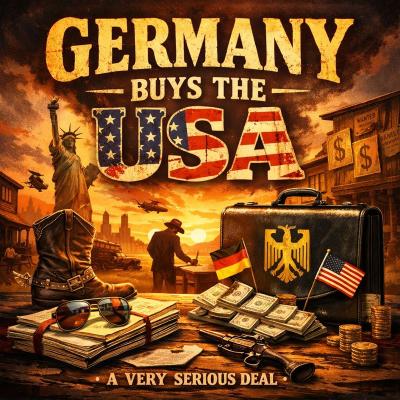
Germany buys the USA (feat. Trump)
A gritty, cinematic Americana track featuring a deep, gravelly male vocal delivering a satirical narrative with deadpan seriousness. Driven by dusty acoustic guitars, twangy electric slides, and a steady, stomping rhythm, the song evokes the atmosphere of a modern Western. The production is polished yet raw, making it an excellent choice for dark comedies, political satire, or edgy road-trip scenes.
Bezpłatnie, także do celów komercyjnych. Jedynym warunkiem jest podanie autora: CC BY 4.0
O tym utworze
This track is a masterclass in tonal contrast and high-fidelity production, blending the sonic aesthetics of classic 'Outlaw Country' with sharp, satirical lyricism. From a production standpoint, the audio landscape is rich and wide. The track opens with a pristine acoustic guitar recording that immediately establishes a dusty, intimate atmosphere, reminiscent of the late-career recordings of Johnny Cash or Leonard Cohen. The mixing is top-tier; the separation between the rhythm section and the lead elements allows the deep, gravelly baritone vocals to sit right in the listener's ear without overwhelming the instrumental bed.
The instrumentation is spot-on for the genre. We hear authentic slide guitars adding a 'weeping' texture in the background, while a steady, unhurried drum groove provides a confident backbone. The bass is warm and round, anchoring the low end without muddying the mix. What makes this track particularly interesting for sync licensing is its duality. Musically, it conveys a serious, moody, and almost noir-western vibe. This makes the instrumental stems highly valuable for serious dramas, travel documentaries, or whiskey commercials looking for that rugged American spirit.
However, the full vocal version transforms the piece into a brilliant asset for dark comedy, political commentary, or ironic internet content. The delivery is deadpan and serious, which heightens the humor of the absurd lyrical premise ('Germany buys the USA'). This kind of track shines in 'explainer' videos, satirical news segments, or scenes in films where a character is taking themselves too seriously. It creates a 'mock-serious' tone that is very popular in modern dramedies.
The breakdown sections and the guitar solo are tastefully executed, offering editors distinct cutting points. The transitions are organic, avoiding jarring shifts, which helps in maintaining the flow of a visual scene. The dynamic range is preserved, allowing the track to breathe rather than being compressed into a wall of sound. This dynamic control is crucial for dialogue-heavy scenes, as the instrumentation leaves plenty of frequency space for voiceovers or on-screen conversation.
Ultimately, this is a versatile asset. It works as a high-quality country rock song, a piece of biting political satire, and a mood-setter for modern western aesthetics. Its professional polish ensures it stands up against commercial releases, making it suitable for high-end broadcast use alongside web-based content.
Dodatkowe informacje
LYRICS
[Intro]
Out on the prairie of the modern age
Deals are drawn on a global stage
[Verse]
He looks north and he squints his eyes
Sees white land under frozen skies
Says it’s business, says it’s fate
Put a price tag on an Arctic state
[Verse]
Maps on the table, pens in red
Power talks louder than words unsaid
If you won’t sell, we’ll come by force
That’s the old empire’s favorite course
[Pre-Chorus]
But the world sighs, tired and worn
From every threat that’s daily born
[Chorus]
So Germany buys the USA
For the safety of the world, okay
No tanks, no walls, just paperwork
And a very serious budget clerk
[Chorus]
Stars and stripes come with a deal
Healthcare, trains, and something real
Freedom rings, but rent is due
Welcome, partner — we bought you too
[Post-Chorus]
No hard feelings, it’s nothing personal
Just a hostile takeover — procedural
[Verse]
Sheriffs argue in TV light
Who’s the toughest, who’s most right
Meanwhile the planet holds its breath
Betting peace against collapse and debt
[Verse]
From Wall Street down to desert sand
Sign right here, shake my hand
We’ll keep your songs, your pride, your flag
Just maybe lose the nuclear brag
[Pre-Chorus]
Calm the fire
Lower the wire
[Chorus]
So Germany buys the USA
For the safety of the world, okay
Less cowboys drunk on destiny
More boring, stable policy
[Bridge]
This ain’t about who’s big or loud
It’s about who cools down the crowd
Empires fall, that’s history
Paper beats artillery
[Final Chorus]
Yeah Germany buys the USA
No boots on ground, just debts to pay
The wild west finally learns the rule
The calmest one runs the saloon
[Outro]
For peace, for quiet, for the world to breathe
Sometimes the safest gun
Is the one you leave
Klasyfikacja
Szukaj podobnych →Gatunki muzyczne
Nastroje
Tagi

![While Russian guns tear lives apart [To the Russian Visitor in My Guestbook] (feat. Folkshade)](https://ende.app/storage/cover/thumbnail/74b96b19-619e-4dff-a4f2-0471da9309f5.jpg)